








Vietnam Road Safety Tips: Driving, Riding, and Safer Travel
Vietnam road safety tips matter because the country combines huge numbers of motorcycles with buses, trucks, cars, bicycles, pedestrians, ferries, mountain roads and fast-changing weather. The safest approach is not to fear the road, but to understand how much margin each trip requires.
WHO noted in 2024 that Vietnam had about 74 million motorcycles, that motorcycles made up more than 90% of the vehicle fleet, and that they were involved in over 60% of road crashes. For visitors, that means road awareness must be built around two-wheel traffic even when you are sitting in a car or bus.
The legal framework also changed recently. Vietnam’s Law on Road Traffic Order and Safety took effect in 2025, with tighter enforcement under Decree 168/2024 and later 2026 amendments affecting child restraints. Practical travel planning should therefore combine current rules with conservative driving habits rather than relying on old blog advice.
This guide covers the rules that matter most to travelers, helmets and restraints, alcohol and phones, speed, turning, pedestrians, rain and mountain roads, rental checks, safer transport alternatives, and what to do when self-driving is not the right choice.
1. Learn the core road rules before your first journey

Vietnam’s basic road logic is straightforward: traffic keeps to the right, road users should stay within the appropriate lane or road section, and official traffic control has priority. In practice, busy streets can look more fluid than the written rules, especially where motorcycles filter through gaps. Do not mistake local improvisation for legal permission.
The Road Traffic Order and Safety Law sets a hierarchy for signals: instructions from traffic officers, traffic lights, road signs, road markings and other control devices. That matters when different cues appear to conflict. A visitor should follow the formal control system rather than copying the movement of the crowd.
Before driving, learn the handful of signs that directly affect your route: one-way roads, no entry, no motorcycle, speed limits, no stopping or parking, turn restrictions, lane arrows and railway-crossing warnings. Navigation apps help with route choice, but the sign in front of you governs the road.
The safest first drive is short and forgiving. Use daylight, avoid peak commuter periods, and choose a route where missing one turn does not force a dangerous correction.
- Keep right and use the lane or road section intended for your vehicle.
- Stop for red lights and follow traffic-police instructions even when surrounding traffic behaves differently.
- If you miss a turn, continue safely and reroute; never cut across multiple lanes at the last second.
- Treat road markings and temporary barriers as instructions, not suggestions.
Explore more: For route planning without self-driving, compare a private transfer option
2. Use helmets, seat belts and child restraints correctly

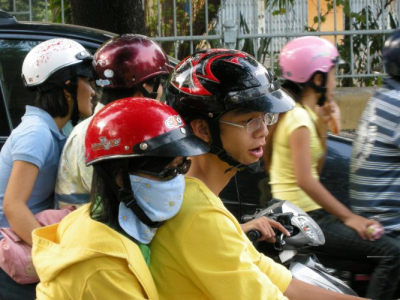
Vietnam requires motorcycle and moped drivers and passengers to wear compliant helmets and fasten the chin strap correctly. A decorative shell or loose strap does not provide the same protection as a well-fitting helmet that covers the head properly and stays in place.
WHO’s 2025 Vietnam helmet work emphasized the difference between simply wearing a helmet and wearing a quality helmet correctly. WHO states that correct helmet use can reduce the risk of death in a crash by more than six times and the risk of brain injury by up to 74%. That is a strong reason to reject cracked, loose, thin or poorly fitting rental helmets.
In cars, drivers and passengers should use seat belts wherever belts are fitted. Family travelers also need to pay attention to the 2026 child-restraint rules. As of July 2026, children under 10 years old and under 1.35 m should not sit in the same row as the driver, except in a one-row vehicle, and private cars should use a suitable child safety device. The enforcement details changed in 2026, so families should confirm the current rule when arranging transport.
For taxis or private cars, tell the provider in advance when a child seat is required. Do not assume the correct restraint will automatically be available on arrival.
- Choose a helmet that fits snugly and fasten the strap before moving.
- Replace a rental helmet with a better one if the shell, liner or strap is damaged.
- Use seat belts in cars even for short urban trips.
- For young children, request the correct restraint in advance and verify how it is installed.
Explore more: See active journeys where equipment and pacing matter
3. Keep alcohol, drugs and handheld phones out of driving

Vietnam’s law prohibits operating a vehicle with alcohol in the driver’s blood or breath. For travelers, the practical rule is simple: if you are driving or riding, do not drink. “One beer” is not a useful planning category when the legal rule is zero alcohol and the consequences of a crash can be far more serious than a traffic fine.
The law also prohibits holding and using a phone or other electronic device while operating a vehicle. Navigation is still useful, but set the route before moving, use a secure mount only when legal and safe, and stop in a safe place before touching the device.
Distraction is especially dangerous in Vietnam because many hazards appear laterally: a scooter enters from a side street, a bus pulls out, a pedestrian steps between parked vehicles, or another rider moves across your path without much separation. Looking down for two seconds can remove the reaction window you need.
If your evening includes alcohol, arrange transport before the first drink. A taxi, app-based ride or private driver removes the temptation to “just ride back slowly.”
- Use a zero-alcohol rule whenever you will control a vehicle.
- Do not hold or operate a phone while the vehicle is moving.
- Set navigation and audio before departure; stop safely to make changes.
- If medication causes drowsiness or slowed reaction, do not ride or drive.
Explore more: Build a private route that includes drivers where needed
4. Control speed and following distance in mixed traffic

Posted speed limits matter, but a legal maximum is not automatically a safe speed. Vietnam’s roads mix vehicles with very different acceleration, braking and visibility. The right speed is the one that lets you stop for the hazard you can reasonably expect ahead.
In cities, that may mean slowing before junctions, market entrances, schools, bus stops and gaps between parked vehicles. On rural roads, it means expecting animals, farm vehicles, gravel, potholes, people entering from homes or fields, and trucks crossing the center line on bends.
Following distance is equally important. Dense traffic often compresses gaps, but matching that compression removes your escape space. Keep enough room to brake progressively rather than suddenly, and avoid sitting in the blind spot of buses and trucks.
When another road user follows too closely, do not accelerate to create distance. Increase the space in front of you so you can slow more gently if something happens.
- Slow before hazards rather than braking hard inside them.
- Increase following distance in rain, darkness, gravel, mountain roads and behind large vehicles.
- Avoid riding beside trucks or buses where the driver may not see you.
- Treat fatigue as a speed problem: when concentration drops, stop for a real break.
Explore more: See how Vietnam Travelers designs slower-paced adventure routes
Quick decision table:
| Road situation | Main risk | Safer response | Best margin |
|---|---|---|---|
| Dense city traffic | Side-entry scooters, sudden stops | Slow down, enlarge gaps, avoid rapid lane changes | Time and space |
| Wet road | Longer braking, slippery paint | Smooth inputs, lower speed, larger following gap | Grip |
| Mountain bend | Limited sight line | Stay in lane, reduce speed before the bend, no blind overtake | Visibility |
| Behind bus/truck | Blind spots and long stopping distance | Do not sit alongside; leave more distance | Escape space |
| Tired rider/driver | Slow decisions and tunnel vision | Stop for a real break or switch transport | Alertness |
5. Signal early and make turns, lane changes and overtakes predictable

The safest road user is easy to read. Use turn signals early enough for others to react, keep them on through the maneuver, and reduce speed before turning. A sudden turn from the wrong side of the lane is risky even when traffic looks slow.
Before changing lanes, check mirrors, glance for a blind-area vehicle, signal, and move gradually. Motorcycles can appear between lanes or alongside a car faster than expected. In congested traffic, patience is safer than repeatedly changing position for a small time gain.
Overtaking deserves an even larger margin. Do not overtake where visibility is limited, at blind bends, near junctions, on narrow bridges or when you would need another vehicle to brake to create space. On mountain roads, a few seconds behind a slow vehicle is usually cheaper than a blind pass.
At intersections, remember that the vehicle you see is not the only hazard. A rider may emerge from behind a bus, a pedestrian may cross during the turn, and oncoming traffic may be partly hidden by parked vehicles.
- Signal before the maneuver, not after you have already started moving sideways.
- Make one deliberate lane change rather than several rapid ones.
- Do not overtake simply because the rider ahead does; confirm your own sight line.
- Slow and yield to pedestrians when turning across a crossing or their path.
Explore more: Read the Ha Giang Loop guide before planning mountain-road riding
6. Protect pedestrians and anticipate scooters, buses and trucks

Vietnamese traffic is mixed. Pedestrians may cross where formal gaps are limited, motorcycles filter around larger vehicles, buses stop and re-enter traffic, and delivery riders may make frequent curbside movements. Safe travel depends on anticipating this interaction rather than assuming every road user will hold a fixed line.
For drivers, the most important vulnerable-user habit is to reduce speed where people are likely to appear: crossings, schools, markets, old quarters, attractions, bus stops and narrow streets with shopfronts. Give pedestrians time to finish crossing instead of accelerating toward the gap behind them.
For pedestrians, predictable movement helps too. Use marked crossings and signals when available, look in both directions, avoid stepping from behind a bus or parked car, and keep watching traffic as you cross. In dense scooter flow, sudden running or reversing direction can be harder for riders to read than a steady path.
Large vehicles create a separate risk. Give buses and trucks room to turn, do not squeeze along the inside of a turning vehicle, and avoid lingering where you cannot see the driver’s mirrors.
- Expect scooters to pass on either side in dense urban traffic.
- Give buses and trucks extra space at corners and when they leave stops.
- Reduce speed near markets, schools, crossings and tourist streets.
- As a pedestrian, stay visible and move predictably rather than darting through gaps.
Explore more: For city days where parking and road stress add little value, customize a driver-supported route
7. Adjust for rain, darkness, mountain roads and rural hazards

Weather can change a familiar road into a different risk environment. Tropical rain reduces visibility, hides potholes, makes painted lines and metal covers slippery, and increases braking distance. Mountain fog can reduce sight lines to a few bends, while low cloud and darkness make unlit vehicles harder to see.
The best rain strategy is often to wait. If you must continue, reduce speed smoothly, increase following distance, avoid abrupt steering or braking, and keep lights on when visibility is poor. Do not shelter under a bridge or in a traffic lane where other vehicles may not expect a stopped motorcycle.
Northern mountain routes such as Ha Giang add steep drops, tight corners, rockfall, livestock, roadworks and sudden weather. Scenic roads reward conservative timing: start early, keep daylight in reserve, and stop before fatigue becomes a navigation or balance problem.
Night riding deserves particular caution. UK travel advice specifically warns that motorbike travel in Vietnam is risky and advises against riding in heavy rain or at night. For a visitor, losing scenery is a small cost compared with losing visibility and recovery margin.
- If heavy rain begins before departure, delay rather than treating the schedule as fixed.
- Use low, smooth inputs on wet surfaces and avoid painted lines where possible.
- Keep a dry layer and waterproof phone protection accessible, not buried under luggage.
- For mountain routes, protect daylight and have a non-riding fallback.
Explore more: Compare a structured Ha Giang motorbike route | Or use an Easy Rider format with a local driver
8. Inspect rental vehicles and verify licence, insurance and documents

A rental shop handing you keys does not prove that you are legally entitled or insured to operate the vehicle. International visitors should confirm the licence framework that applies to their nationality and the exact motorcycle or car category. UK guidance, for example, requires qualifying travelers to carry the 1968 International Driving Permit together with their UK licence; other nationalities should check their own rules.
Third-party insurance is another basic requirement. Travel insurance is separate: some policies exclude motorcycle use above certain engine sizes, exclude riding without the correct licence, or exclude high-risk routes. Read the activity wording, not just the policy headline.
Inspect the machine before leaving. On a motorbike, check both brakes, tire condition and pressure, lights, indicators, horn, mirrors, steering, fuel, electric start, chain or drive condition where visible, and any existing damage. Record a 360-degree video and photograph the fuel level.
Get the rental terms in writing: return time, deposit, fuel policy, repair responsibility, roadside support and permission to leave the city or province. Do not surrender your passport as a routine vehicle deposit; current UK travel advice specifically warns against this practice.
- Confirm the licence and insurance position for the exact vehicle class.
- Inspect the vehicle in daylight and record existing damage before moving.
- Take a photo of the rental agreement and support number.
- Reject a bike with weak brakes, damaged tires, faulty lights or a helmet you do not trust.
Explore more: Start with Vietnam Travelers Bike & Motorbike Rental planning
9. Know when not to self-drive - and choose the safer transport instead

Good road safety includes the decision not to drive. A traveler who is experienced on motorcycles at home may still need time to adjust to Vietnamese urban flow, while a confident city rider may not have the mountain experience needed for steep wet roads. Different risks require different skills.
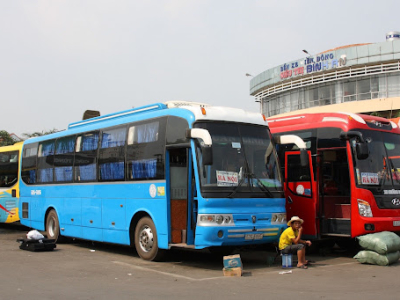
Alternatives are not automatically risk-free. UK travel advice notes that bus and coach crashes are not uncommon and may be more likely at night. The practical comparison is therefore not “motorbike versus safe bus”; it is the quality of the operator, time of day, route difficulty, driver fatigue, weather and how much control you have over the schedule.
For families, older travelers, first-day arrivals, heavy luggage or tight airport connections, a reputable private transfer can remove parking, navigation and fatigue from the journey. For scenic motorcycle areas, an Easy Rider or guided motorbike format can preserve the open-road experience without requiring the guest to control the bike.
If the weather closes in, your licence is uncertain, you are tired, or the route feels harder than expected, changing transport is good travel planning, not a failed adventure.
- Use a reputable taxi, driver or private transfer when you are tired or unfamiliar with the traffic.
- Prefer daytime intercity travel when the overnight option would leave you exhausted.
- Use an Easy Rider or guided format for difficult mountain routes if your riding experience is limited.
- Build buffer time around airports and long transfers so speed never becomes the solution.
Explore more: Compare a private Hanoi Airport - Halong Bay transfer | Explore Vietnam Travelers Adventure Tours | Customize a route around your comfort level
10. FAQ

Is road travel in Vietnam safe for tourists?
It can be, but the risk varies sharply by mode, route, rider experience, weather and operator quality. Major cities require strong awareness of motorcycle traffic, while mountain roads add visibility, surface and cornering risks. Choose the mode that matches your skills rather than the most adventurous option.
Do I have to wear a helmet on a motorbike in Vietnam?
Yes. Motorcycle and moped drivers and passengers must wear a compliant helmet and fasten the chin strap correctly. Use a quality helmet that fits, not merely the cheapest helmet supplied with a rental.
Can I drink one beer and still ride?
Do not plan on it. Vietnam prohibits operating vehicles with alcohol in the driver’s blood or breath. If you are riding or driving, use a zero-alcohol rule.
Can I hold my phone for navigation while riding?
No. The law prohibits holding and using phones or other electronic devices while operating a vehicle. Set the route before departure and stop safely before changing navigation.
What licence does a foreign tourist need to ride a motorbike?
It depends on nationality, the licence framework that applies to your home country and the motorcycle category. Check official guidance before travel. A rental shop agreeing to rent you a bike is not proof that you are legally licensed.
Is Ha Giang suitable for a beginner rider?
It is not a good place to learn basic motorcycle control. The route combines steep gradients, tight bends, changing weather and remote sections. Beginners should use an Easy Rider or another guided format.
Are night buses safer than riding a motorbike?
Not automatically. Night buses remove the need for you to ride, but coach safety still depends on the operator, vehicle, driver fatigue, road and weather. Compare a daytime bus, train, flight or private transfer when the overnight option creates fatigue risk.
What should I do if it starts raining heavily?
Slow down smoothly, increase following distance and avoid abrupt braking or steering. If visibility, flooding or grip is poor, stop in a genuinely safe place or delay the journey. A schedule is not a reason to continue in unsafe conditions.
What should I do after a road accident?
Stop, make the scene as safe as you reasonably can, assist injured people, contact local authorities and medical help, preserve evidence when safe, and notify your insurer or rental provider. Foreign travelers should cooperate fully with police and contact their embassy or consulate if serious legal or medical issues arise.
What is the safest transport choice for my Vietnam trip?
There is no single safest mode for every leg. Use experienced drivers for fatigue-sensitive or difficult transfers, trains or flights for long jumps, reputable buses where timing and operator quality work, and self-riding only when your licence, insurance, experience and conditions all support it.
Plan a Vietnam route that matches your road confidence
Share your dates, destinations, group profile, luggage and comfort level. Vietnam Travelers can combine private transfers, guided riding and independent travel so difficult road sectors do not control the whole trip.
Customize Your TripPlanning sources and image credits
Rules checked 29 August 2026. Travelers should recheck official guidance before driving because enforcement details and licence recognition can change.
- Vietnam Law on Road Traffic Order and Safety 2024 (English translation)
- Decree 168/2024 road traffic penalties (English translation)
- UK FCDO Vietnam road travel and motorbike safety advice
- WHO motorcycle safety workshop in Vietnam
- WHO Vietnam quality helmet guidance
- Vietnam child safety-device guidance, 2026
Image credits: Vyacheslav Argenberg (CC BY 4.0); Vyacheslav Argenberg (CC BY 4.0); Wolkenkratzer (CC BY-SA 4.0); Leo D (CC0 1.0); Vinnie Cartabiano (CC BY 2.0); ntt (CC BY-SA 3.0); Clay Gilliland (CC BY-SA 2.0); Khánh Hmoong (CC BY 2.0); Wikimedia Commons contributor (CC0 1.0); Dragfyre (CC BY-SA 3.0); Violetbonmua (CC BY-SA 3.0). Each section uses a different real, non-AI web photograph displayed in a responsive 850 × 500 crop frame.




.jpg)

.jpg)


