








Ninh Binh to Ho Chi Minh City Bus: Times, Sleeper Options, Fares, and Tips
Ninh Binh to Ho Chi Minh City bus travel is possible, but it is not a routine short transfer. You are crossing most of Vietnam by road.
For some travelers, a direct sleeper avoids changing vehicles. For others, a train or a planned stop in central Vietnam creates a calmer journey.
This guide focuses on realistic journey time, current fare examples, sleeper layouts, Ninh Binh pickup, Ho Chi Minh City arrival, and better alternatives when comfort matters.
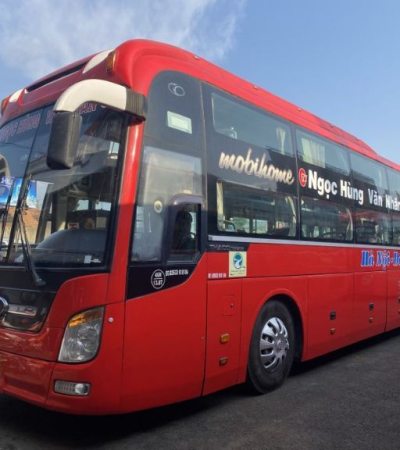
Quick summary: Treat this as a 30-plus-hour overland journey. Current 2026 route data places the trip around the low-to-mid 30-hour range, while current 12Go sleeper listings show sample fares around US$38-46. Confirm the exact pickup, vehicle, final city stop, luggage allowance, and arrival day before paying.
1. Decide whether one long bus ride fits your itinerary
A sleeper layout helps with rest, but it does not turn a 30-plus-hour road journey into a short transfer.
The direct bus makes the most sense when your priority is avoiding transfers. You board once in Ninh Binh and remain with one long-distance service toward southern Vietnam.
The trade-off is fatigue. A very long road journey includes engine noise, road movement, service stops, passenger pickups, and limited freedom to move.
Choose the bus when one-ticket simplicity matters most.
Consider the train when walking space and a fixed station matter more.
Split the route when you want to visit central Vietnam anyway.
Avoid a tight same-day connection after the expected arrival time.
2. How long is the Ninh Binh to Ho Chi Minh City bus?
Departure may feel close to Ninh Binh's quiet countryside, but the final destination lies far to the south.
Planning note, checked 7 August 2026: Virail currently estimates the route at about 33 hours 38 minutes. Other booking pages show multiple sleeper services whose true elapsed time crosses into the following day or later.
Do not read an arrival clock time without checking the date. A listing such as 10:00 to 12:12 on a long-haul route clearly requires day context.
Road traffic, long rest stops, passenger pickups, weather, and city congestion can extend the schedule. Keep the arrival day flexible.
Planning item
Realistic assumption
Why it matters
Journey length
About 30-36+ hours
The route can consume more than one calendar day
Arrival plan
Keep several hours of buffer
City traffic and long-haul delays are hard to predict
First activity
Light schedule after arrival
Sleep quality on the bus may be inconsistent
3. Confirm the exact Ninh Binh pickup point
Long-distance coaches may use stations, operator offices, or arranged pickup points rather than your hotel door.
Ninh Binh is not one boarding point. Travelers may stay in Ninh Binh city, Tam Coc, Trang An, or near another attraction.
Vexere lists Ninh Binh Bus Station at 207 Le Dai Hanh as a major transport reference. Your long-haul service may still use an operator office or another pickup location.
Save the exact map pin before leaving your hotel.
Ask whether hotel pickup is included or only advertised nearby.
Confirm reporting time separately from departure time.
Keep the operator's phone or messaging contact offline.
4. Choose the sleeper layout, not only the operator name
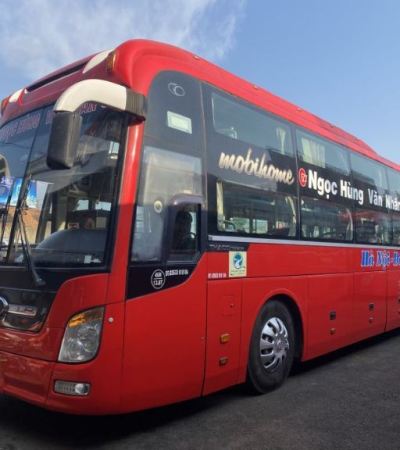
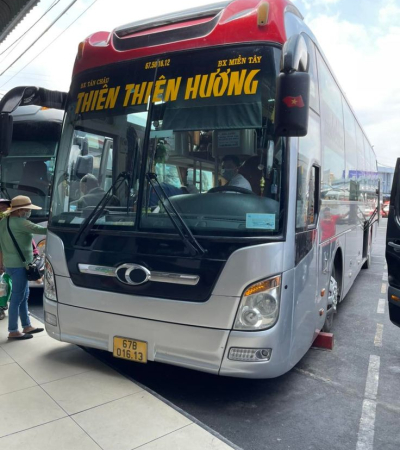
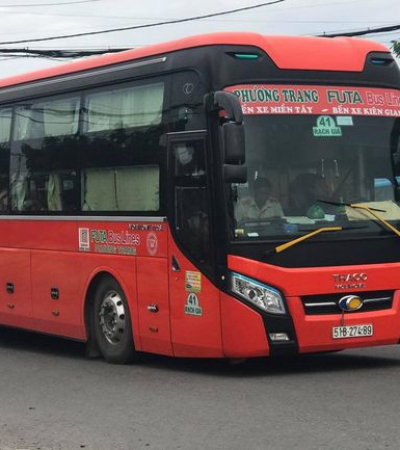
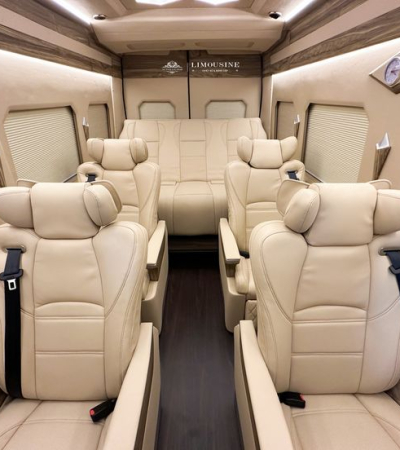
Sleeper buses vary in berth width, privacy, headroom, storage, and cabin layout.
A generic “sleeper bus” label can hide very different vehicles. Traditional sleeper layouts use narrow reclining berths. Newer cabin-style coaches may add curtains, charging ports, or more privacy.
Tall travelers should check berth dimensions when available. Couples should not assume a “double cabin” is a full double bed.
For this route, the best seat is the one you can tolerate for a full day and night, not simply the cheapest ticket.
5. What current fares actually tell you
Fare comparisons only make sense when the vehicle type, pickup, drop-off, and travel date are the same.
On a current August 2026 sample, 12Go lists several sleeper services around US$38-46. The live total can change with date, operator, seat class, and platform fees.
Do not choose only by the lowest number. A slightly higher fare can be worthwhile when it includes a clearer pickup, better berth, or more convenient city arrival.
Screenshot the final booking page. Keep the operator name, vehicle class, pickup point, drop-off point, reporting time, and luggage rules together.
6. Prepare for a full day and night on the road
Comfort becomes a logistics issue on a journey this long. Pack for temperature changes, rest stops, limited access to your main luggage, and uneven sleep.
Keep with you: passport, wallet, phone, charger, medication, tissues, and water.
Wear: soft layers and socks for strong air conditioning.
Sleep: eye mask and earplugs can help more than extra gadgets.
Food: carry a small snack even when meal stops are expected.
Valuables: keep them inside your berth area, not in checked luggage.
Comfort check: If you already know that road motion prevents you from sleeping, the direct bus may save a transfer but cost you most of the following day in recovery.
7. Do not treat “Ho Chi Minh City” as one arrival point
Your final bus stop may still require a city transfer before you reach a District 1 hotel or sightseeing area.
Ho Chi Minh City is large, and long-distance coaches can use different terminals or operator offices. A destination label alone is not enough.
Before booking accommodation around arrival time, open the exact drop-off map pin. Estimate the final Grab or taxi sector and avoid assuming the bus ends beside Ben Thanh Market.
Whichever transport you choose, protect enough energy to enjoy Ho Chi Minh City after arrival.
The train deserves serious comparison because Ninh Binh has a railway station on the north-south line.
Vexere's July 2026 timetable shows direct trains taking roughly 30 hours 27 minutes to 38 hours 33 minutes, with sample fares from about VND 1.066 million to VND 1.794 million depending on train and class.
Option
Main advantage
Main drawback
Sleeper bus
Can offer convenient road pickup and one-ticket travel
Long road vibration and limited movement
Sleeper train
Fixed stations, ability to stand and walk
Still a very long journey; cabins can sell out
Split journey
Turns transfer time into sightseeing
Requires another hotel and extra planning
9. Breaking the journey can be the better travel decision
Arriving with usable energy matters when your next days are planned around markets, museums, food, and southern excursions.
If your wider itinerary includes Hue, Da Nang, or Hoi An, forcing one direct Ninh Binh-to-Saigon bus can skip places you already want to see.
A planned central stop reduces continuous sitting and makes delays easier to absorb. It also keeps your north-to-south route geographically logical.
Vietnam Travelers' broader Vietnam itineraries commonly connect northern highlights, central heritage cities, and Ho Chi Minh City as separate stages rather than one nonstop sightseeing jump.
Travel date: confirm the arrival date, not only the clock time.
Pickup: save the Ninh Binh map pin and reporting time.
Vehicle: standard sleeper, cabin sleeper, or another coach layout.
Berth: upper/lower position and dimensions when available.
Drop-off: exact Ho Chi Minh City terminal or operator office.
Luggage: checked bag quantity and special-item rules.
Cancellation: refund and rescheduling conditions.
Arrival day: avoid non-refundable tours immediately after the bus.
11. FAQ
1. How long does the Ninh Binh to Ho Chi Minh City bus take?
Plan for a very long overland journey. Current route aggregators place the trip around the low-to-mid 30-hour range, and traffic, pickup patterns, or operator routing can push it longer.
2. Is there a direct Ninh Binh to Ho Chi Minh City sleeper bus?
Current booking platforms list long-haul sleeper services on the route. The exact operator, pickup point, vehicle type, and final Ho Chi Minh City stop should be confirmed for your travel date.
3. How much does the bus cost?
On a current August 2026 sample, 12Go shows sleeper listings around US$38-46. Prices change by date, operator, cabin type, and booking platform, so use the live checkout total.
4. Where do buses leave from in Ninh Binh?
Pickup can be an operator office, a roadside meeting point, or a bus station. Ninh Binh Bus Station at 207 Le Dai Hanh is one reference point, but your ticket may use a different location.
5. Is a sleeper bus comfortable for such a long trip?
It gives you a reclined or lying position, but comfort varies by vehicle and body height. A 30-plus-hour road journey still means vibration, stops, limited personal space, and interrupted sleep.
6. Is the train better than the bus?
For many travelers, the train is easier to tolerate because you can stand, walk, and use a fixed railway station. The bus can be useful when its pickup and drop-off suit your itinerary better.
7. Can I break the journey in central Vietnam?
Yes. Splitting the route around Hue, Da Nang, or Hoi An can reduce fatigue and turn one demanding transfer into part of a north-to-south itinerary.
8. Where will the bus arrive in Ho Chi Minh City?
Do not assume District 1. Long-distance services may use a major terminal or an operator office elsewhere in the city. Confirm the exact map pin before choosing your hotel transfer.
9. How much luggage can I take?
Luggage rules vary by operator. Standard suitcases are usually easier than bulky sports gear, bicycles, or oversized bags. Confirm special luggage before payment.
10. How early should I book?
Book earlier when traveling on weekends, public holidays, Tet periods, or when you need a specific sleeper or cabin position. Reconfirm the pickup message on the day before travel.
Build a calmer north-to-south route
Share your Ninh Binh dates, preferred comfort level, central Vietnam stops, and Ho Chi Minh City plans. Vietnam Travelers can shape the route around the time you actually want to spend on the road.